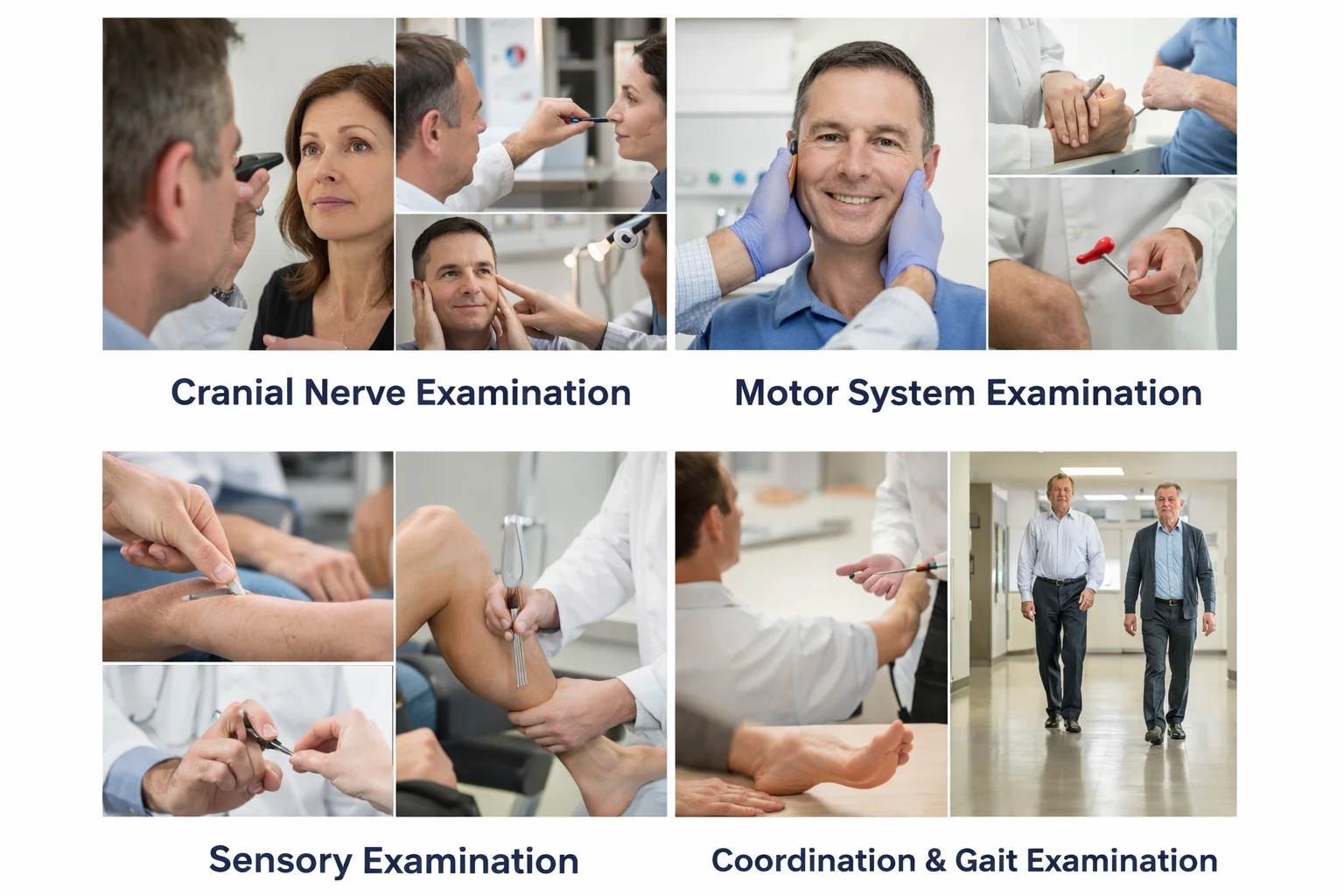
A neurological examination is a detailed clinical assessment performed to evaluate the health and functioning of the brain, spinal cord, and peripheral nerves. It is one of the most important tools used by neurologists to identify disorders affecting the nervous system. During a neurological examination, Dr. Sudheer Pachipala carefully assesses mental status, motor strength, reflexes, coordination, sensation, and cranial nerve function.
This examination helps determine whether symptoms such as headaches, weakness, numbness, tremors, seizures, or memory changes are linked to neurological conditions. It is a non-invasive and structured evaluation that provides valuable insight into how the nervous system is functioning and whether further testing is required.
A neurological examination is recommended when patients experience symptoms that suggest possible involvement of the nervous system. These may arise from various causes, including stroke, epilepsy, multiple sclerosis, brain infections, nerve injuries, spinal cord disorders, Parkinson’s disease, neuropathy, or brain tumors.
Chronic conditions such as diabetes and hypertension can also affect nerve function over time, leading to sensory or motor changes that require neurological assessment. In some cases, even minor symptoms such as dizziness or persistent headaches may indicate underlying neurological issues that need professional evaluation.
Patients are usually advised to undergo a neurological examination if they experience persistent or unexplained symptoms. Common concerns include severe or recurrent headaches, sudden weakness in the face or limbs, numbness or tingling sensations, balance problems, tremors, difficulty speaking, memory loss, confusion, seizures, or vision disturbances.
Changes in coordination, unexplained falls, chronic back pain with radiation to the legs, or altered sensation may also signal nerve or spinal involvement. Early recognition of these symptoms allows for timely diagnosis and appropriate management.
The neurological examination begins with a detailed medical history to understand symptom patterns, duration, and associated risk factors. Dr. Sudheer Pachipala then conducts a systematic clinical evaluation. Mental functions such as memory, orientation, and speech are assessed. Cranial nerves controlling vision, hearing, facial movements, and swallowing are examined. Muscle strength, tone, and reflexes are carefully checked to detect abnormalities. Sensory testing helps evaluate touch, pain, temperature, and vibration perception.
Depending on the findings, additional diagnostic tests may be recommended. These can include MRI or CT scans of the brain and spine, nerve conduction studies, EEG for seizure evaluation, or blood tests to identify metabolic causes. The neurological examination guides these investigations and helps pinpoint the exact area of concern.
Treatment depends entirely on the underlying diagnosis identified during the neurological examination. If the issue is related to migraine or tension headaches, medications and lifestyle modifications may be sufficient. For conditions such as epilepsy, anti-seizure medications are prescribed. Stroke management may involve emergency interventions, blood thinners, or rehabilitation therapy.
Neuropathies may require blood sugar control, vitamin supplementation, or specific medications to relieve nerve pain. Movement disorders like Parkinson’s disease are managed with targeted therapies that improve quality of life. In some cases, surgical consultation may be necessary for brain or spine conditions. The goal is always to provide personalized, evidence-based treatment tailored to the patient’s needs.
Follow-up care is essential in neurological conditions to monitor progress and adjust treatment plans. Regular review visits allow for medication adjustments, symptom monitoring, and evaluation of recovery. Rehabilitation therapies such as physiotherapy, occupational therapy, or speech therapy may be recommended depending on the condition.
Lifestyle modifications including stress management, regular exercise, proper sleep, and dietary adjustments often support neurological recovery and overall health. Ongoing communication between the patient and neurologist ensures optimal long-term outcomes.
A neurological examination itself is safe and does not carry significant risks, as it is a clinical, non-invasive assessment. However, untreated neurological conditions can lead to serious complications such as permanent nerve damage, stroke-related disability, progressive weakness, cognitive decline, or seizures.
Early evaluation significantly reduces the risk of complications by enabling timely diagnosis and treatment. Delayed medical attention can allow certain neurological disorders to worsen, sometimes irreversibly.
A neurological examination itself is safe and does not carry significant risks, as it is a clinical, non-invasive assessment. However, untreated neurological conditions can lead to serious complications such as permanent nerve damage, stroke-related disability, progressive weakness, cognitive decline, or seizures.
Early evaluation significantly reduces the risk of complications by enabling timely diagnosis and treatment. Delayed medical attention can allow certain neurological disorders to worsen, sometimes irreversibly.
A comprehensive neurological examination by Dr. Sudheer Pachipala provides clarity, reassurance, and a clear treatment pathway, helping patients regain confidence and maintain optimal neurological health.
Chat With Me