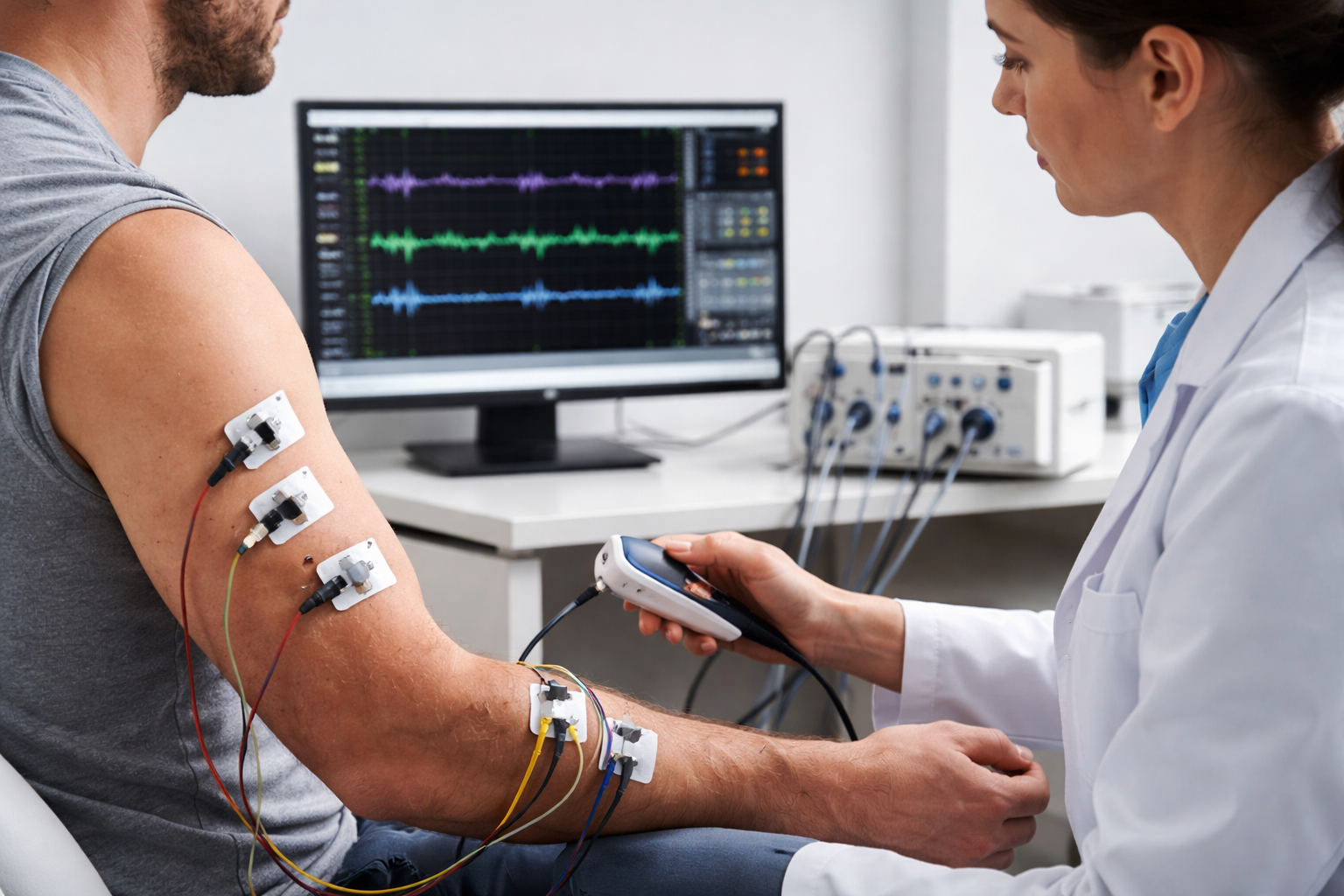
EMG (Electromyography)
Overview
Electromyography (EMG) is a specialized diagnostic test used to evaluate the health of muscles and the nerve cells that control them. Performed by experienced neurologists such as Dr. Sudheer Pachipala, EMG plays a crucial role in identifying disorders that affect the peripheral nerves, neuromuscular junction, and muscles. The test measures the electrical activity produced by skeletal muscles and helps determine whether symptoms such as weakness, numbness, tingling, or muscle pain are related to nerve dysfunction or primary muscle disease.
EMG is often performed alongside a nerve conduction study (NCS) to provide a comprehensive assessment of nerve and muscle function. Together, these tests allow for accurate diagnosis and guide effective treatment planning.
Causes
An EMG test is recommended when patients experience symptoms that suggest a neuromuscular disorder. These symptoms may arise from conditions affecting the peripheral nerves, such as nerve compression syndromes, nerve injuries, or neuropathies. It is also helpful in evaluating muscle disorders like myopathies and inflammatory muscle diseases.
Certain systemic conditions, including diabetes, autoimmune disorders, and metabolic imbalances, can damage nerves over time and lead to abnormal muscle responses. EMG helps identify the underlying cause by distinguishing whether the problem originates in the muscle tissue itself or in the nerves supplying the muscles.
Symptoms
Patients who require an EMG commonly report persistent muscle weakness, muscle cramps, unexplained muscle pain, numbness, tingling sensations, or a “pins and needles” feeling in the limbs. Some may experience muscle twitching or loss of muscle bulk. In more advanced cases, coordination difficulties or progressive weakness may interfere with daily activities.
Because these symptoms can overlap with several neurological and musculoskeletal conditions, EMG provides clarity and helps pinpoint the exact source of the problem.
Diagnosis
EMG is a minimally invasive procedure conducted in a controlled clinical setting. During the test, a fine needle electrode is gently inserted into specific muscles to record electrical activity at rest and during muscle contraction. The signals are displayed on a monitor and analyzed by the neurologist to detect abnormal patterns.
The test typically takes 30 to 60 minutes, depending on the number of muscles evaluated. Most patients tolerate the procedure well, although mild discomfort may occur during needle insertion. The results are carefully interpreted in combination with clinical examination findings and, when necessary, additional imaging or laboratory tests.
Treatment Options
EMG itself is a diagnostic tool rather than a treatment. However, the findings play a vital role in shaping the treatment strategy. Once the underlying condition is identified, management may include medications to reduce inflammation or nerve pain, physical therapy to strengthen weakened muscles, lifestyle modifications, or surgical intervention in cases such as nerve compression.
Early and accurate diagnosis through EMG allows timely intervention, which can prevent progression of nerve damage and improve long-term outcomes. Personalized treatment plans are developed based on the specific diagnosis and the severity of the condition.
Post-Treatment Care
After an EMG procedure, patients can usually resume normal activities immediately. Mild soreness at the needle insertion sites may occur but typically resolves within a day or two. Applying a cold compress can help reduce minor discomfort.
If EMG leads to a confirmed diagnosis requiring treatment, follow-up visits are essential to monitor recovery and response to therapy. Adhering to prescribed medications, physiotherapy schedules, and lifestyle recommendations significantly enhances recovery and prevents complications.
Risks or Complications
EMG is considered a safe and low-risk procedure when performed by a trained neurologist. Minor bruising or temporary muscle soreness at the insertion site is the most common side effect. Infection or significant bleeding is extremely rare. Patients who are on blood-thinning medications or who have bleeding disorders should inform their doctor prior to the procedure to ensure appropriate precautions are taken.
With proper technique and sterile precautions, complications are minimal, and the diagnostic benefits far outweigh the risks.
When to See a Doctor
You should consult a neurologist if you experience persistent muscle weakness, unexplained numbness, tingling sensations, muscle wasting, or recurrent muscle cramps that do not improve. Early evaluation is particularly important if symptoms are progressive or affecting your daily activities.
Timely neurological assessment and appropriate diagnostic testing, including EMG when indicated, can lead to early diagnosis and effective treatment. If you have ongoing nerve-related symptoms, seeking expert consultation can help protect your nerve health and improve your quality of life.