
For accurate diagnosis and comprehensive neurological care, scheduling a consultation with Dr. Sudheer Pachipala ensures thorough evaluation and evidence-based management tailored to your condition.
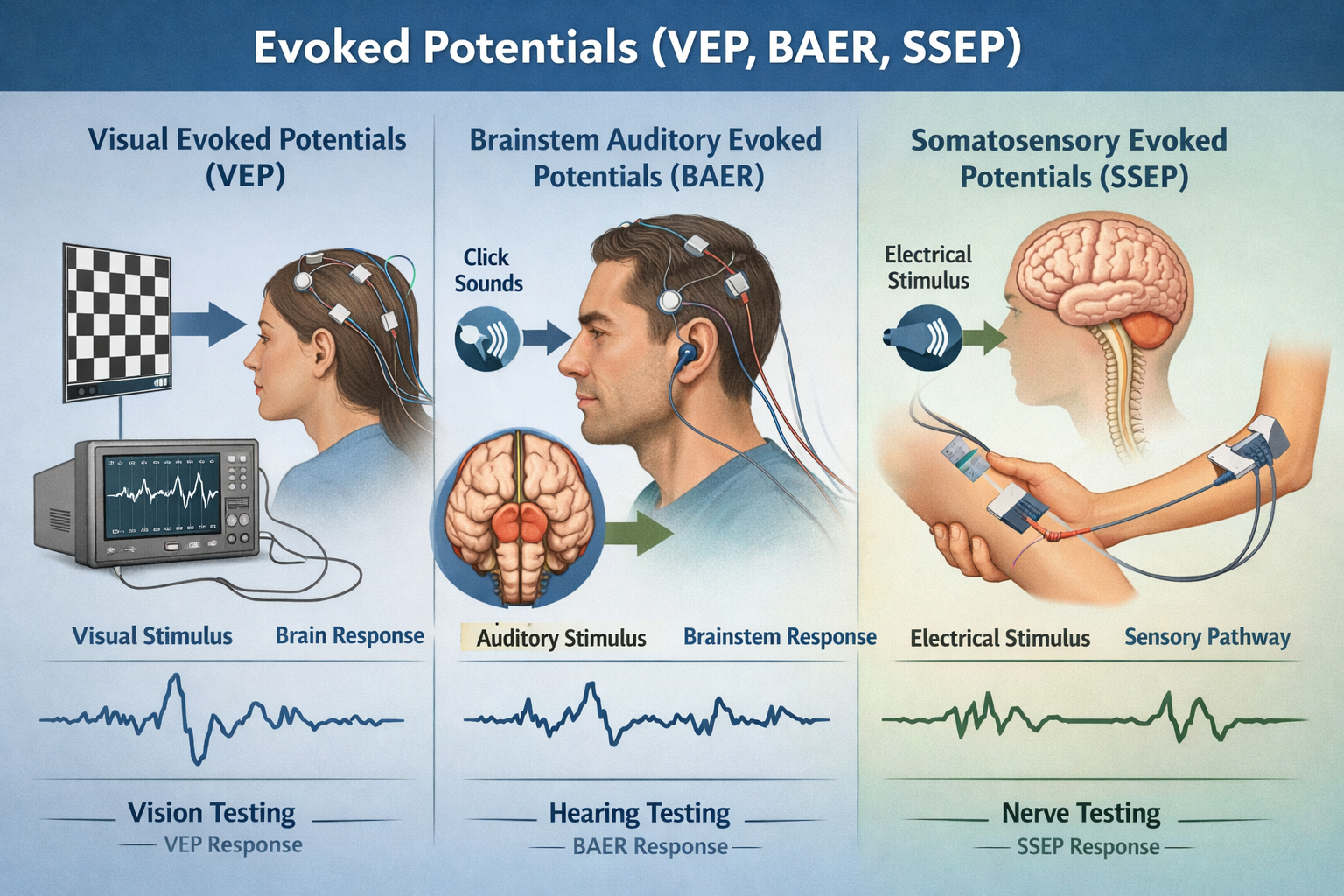
Evoked Potentials are specialized neurophysiological tests used to measure how well electrical signals travel through specific sensory pathways of the nervous system. These tests help evaluate the functional integrity of the brain, spinal cord, and peripheral nerves by recording the brain’s response to visual, auditory, or sensory stimuli. The three most commonly performed studies include Visual Evoked Potentials (VEP), Brainstem Auditory Evoked Response (BAER), and Somatosensory Evoked Potentials (SSEP).
Under the expert care of Dr. Sudheer Pachipala, Evoked Potential studies are performed with precision and interpreted in the context of each patient’s clinical symptoms. These tests are non-invasive, safe, and highly valuable in detecting neurological disorders that may not always appear on routine imaging scans. They are especially useful in diagnosing demyelinating diseases, nerve pathway dysfunction, and certain brainstem or spinal cord conditions.
Evoked Potential abnormalities are typically caused by conditions that disrupt normal nerve signal transmission. Diseases affecting the myelin sheath, such as multiple sclerosis, are among the most common causes. Inflammation of the optic nerve (optic neuritis), brainstem disorders, spinal cord injuries, tumors, vitamin deficiencies, and certain inherited neurological conditions may also alter the conduction of sensory signals.
In some cases, head injuries, stroke, infections, or chronic metabolic conditions such as diabetes can impair neural pathways. Evoked Potentials help identify these disruptions early, even when structural imaging appears normal.
Patients who require Evoked Potential testing often present with symptoms related to sensory pathway dysfunction. Visual disturbances such as blurred vision, double vision, reduced color perception, or unexplained vision loss may indicate the need for a VEP study. Hearing difficulties, ringing in the ears, imbalance, or suspected brainstem dysfunction may warrant BAER testing.
SSEP testing is commonly recommended for individuals experiencing numbness, tingling, weakness, coordination problems, or suspected spinal cord involvement. These tests are particularly helpful when symptoms are subtle, intermittent, or difficult to localize clinically.
Evoked Potential studies are performed by placing small electrodes on the scalp and, in some cases, along the spine or limbs. During the procedure, the patient is exposed to specific stimuli such as flashing visual patterns (for VEP), clicking sounds through headphones (for BAER), or mild electrical pulses applied to the arms or legs (for SSEP). The brain’s electrical responses are recorded and analyzed for timing and amplitude.
The test is painless, though mild tingling may be felt during SSEP stimulation. The procedure usually takes 30 to 90 minutes, depending on the type of study performed. Abnormal delays or reduced signal strength can indicate dysfunction in the corresponding neural pathway. These results are interpreted alongside clinical examination findings and imaging studies to arrive at an accurate diagnosis.
Evoked Potentials themselves are diagnostic tools and do not treat disease directly. However, they play a critical role in guiding appropriate treatment decisions. Once an underlying neurological condition is identified, management may include medications to reduce inflammation, immunotherapy for demyelinating disorders, vitamin supplementation, surgical intervention for compressive lesions, or rehabilitation therapies.
Early detection through Evoked Potential testing allows for timely treatment, which can significantly improve outcomes in many neurological conditions. Individualized treatment planning ensures that therapy is targeted and evidence-based.
There is no recovery period required after Evoked Potential testing. Patients can resume normal activities immediately. If treatment is initiated based on test results, follow-up evaluations may be scheduled to monitor disease progression or response to therapy.
In certain chronic neurological disorders, repeat Evoked Potential studies may be recommended to assess stability or improvement over time. Regular neurological follow-up ensures optimal long-term management and functional preservation.
Evoked Potential testing is considered extremely safe. The procedures are non-invasive and do not involve radiation exposure. Some patients may experience mild discomfort from electrode placement or brief tingling sensations during sensory stimulation, but serious complications are exceptionally rare.
Because the test measures natural electrical activity in the brain and nerves, it does not pose significant health risks and is suitable for both adults and children when clinically indicated.
You should consult a neurologist if you experience unexplained vision changes, persistent hearing disturbances, numbness, weakness, balance problems, or other neurological symptoms. Early evaluation is especially important if symptoms are progressive or recurrent.
Evoked Potential testing is particularly valuable when MRI findings are inconclusive but clinical suspicion for neurological disease remains high. Timely neurological assessment helps prevent complications and supports early intervention, improving overall quality of life.
For accurate diagnosis and comprehensive neurological care, scheduling a consultation with Dr. Sudheer Pachipala ensures thorough evaluation and evidence-based management tailored to your condition.

Chat With Me