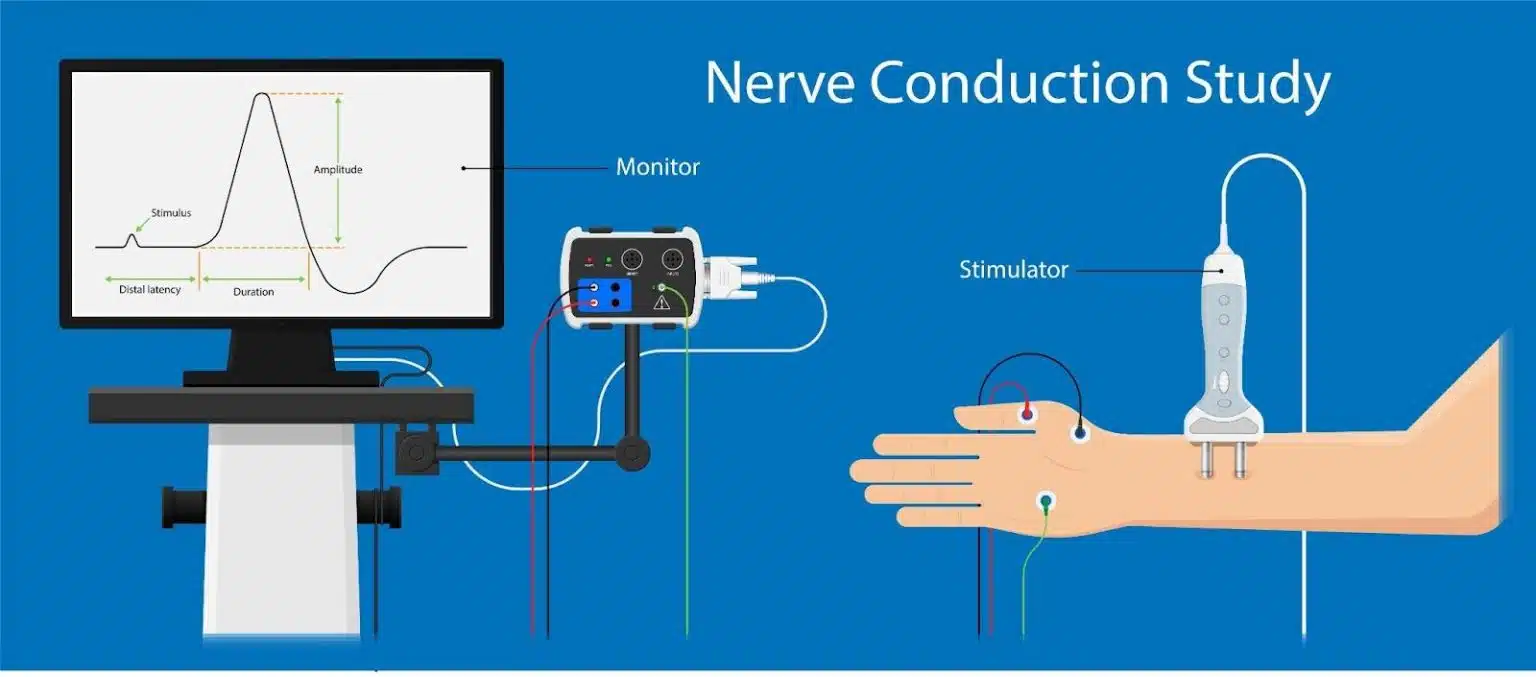
Nerve Conduction Studies (NCS) are specialized diagnostic tests used to evaluate how well and how fast electrical signals travel through your peripheral nerves. These nerves connect the brain and spinal cord to the muscles and sensory organs, allowing movement, sensation, and coordination. When a nerve is damaged or compressed, the speed and strength of these electrical signals are altered. NCS helps identify the location, severity, and type of nerve damage with precision.
This test is commonly performed to assess conditions affecting the hands, legs, arms, and feet. It is often done alongside Electromyography (EMG) to provide a comprehensive evaluation of neuromuscular function. NCS is a safe, reliable, and widely used tool in modern neurology, helping guide accurate diagnosis and personalized treatment planning.
Nerve conduction studies are recommended when symptoms suggest possible nerve dysfunction. Several medical conditions can affect nerve health. Diabetes is one of the most common causes of nerve damage, leading to diabetic neuropathy. Other causes include nerve compression syndromes such as carpal tunnel syndrome, traumatic injuries, vitamin deficiencies, autoimmune disorders, infections, and hereditary nerve diseases.
Chronic conditions such as thyroid disorders, kidney disease, and certain inflammatory neuropathies can also impair nerve function. In some cases, prolonged pressure on a nerve or repetitive strain may lead to localized nerve damage. Identifying the underlying cause is essential for effective treatment, and NCS plays a crucial role in that process.
Patients who require nerve conduction studies often experience symptoms related to nerve dysfunction. These may include numbness, tingling, burning sensations, weakness in the limbs, muscle cramps, or reduced coordination. Some individuals report sharp, shooting pain along a nerve pathway, while others may notice difficulty gripping objects or frequent falls due to leg weakness.
Symptoms may develop gradually or appear suddenly, depending on the underlying condition. Persistent or progressive symptoms should not be ignored, as early evaluation improves treatment outcomes and prevents long-term complications.
Nerve Conduction Studies are performed in a controlled clinical setting. During the procedure, small surface electrodes are placed on the skin over specific nerves. A mild electrical stimulus is applied to measure how quickly and effectively the nerve transmits signals. The test is generally well tolerated, although patients may feel brief tingling or mild discomfort during stimulation.
The results provide detailed information about nerve function, including conduction velocity and signal amplitude. This helps distinguish between nerve damage affecting the protective covering (myelin sheath) and damage affecting the nerve fiber itself. NCS findings allow the neurologist to confirm diagnoses such as peripheral neuropathy, nerve entrapment, radiculopathy, or neuromuscular disorders.
Treatment depends entirely on the underlying cause identified through clinical evaluation and diagnostic testing. If nerve compression is detected, conservative management such as splinting, physiotherapy, and medications may be recommended. In more severe cases, surgical intervention might be necessary to relieve pressure on the nerve.
For neuropathies related to diabetes or metabolic conditions, optimizing blood sugar levels and correcting nutritional deficiencies are essential. Autoimmune-related nerve disorders may require immunotherapy or specific medications. Pain management strategies, including nerve-stabilizing medications, are often used to improve comfort and quality of life.
Early intervention significantly improves outcomes, and a tailored treatment plan is designed based on individual findings and overall health status.
Following diagnosis and treatment, regular follow-up is important to monitor nerve recovery and prevent progression. Lifestyle modifications such as maintaining healthy blood sugar levels, balanced nutrition, regular exercise, and avoiding repetitive strain can support nerve health. Patients may also benefit from physiotherapy to improve strength and coordination.
Adhering to prescribed medications and attending scheduled reviews ensures optimal recovery. In some cases, repeat nerve conduction studies may be performed to assess improvement or disease progression.
Nerve Conduction Studies are generally safe and associated with minimal risk. The electrical impulses used are low intensity and controlled. Some patients may experience temporary mild discomfort, slight skin irritation, or muscle twitching during the test. Serious complications are extremely rare.
The procedure does not involve radiation and does not cause long-term nerve damage. Patients with implanted electrical devices, such as pacemakers, should inform their doctor before the test so appropriate precautions can be taken.
You should consult a neurologist if you experience persistent numbness, tingling, weakness, unexplained pain, or difficulty with coordination. Early evaluation is particularly important for individuals with diabetes, thyroid disorders, autoimmune diseases, or a history of nerve injury.
If symptoms interfere with daily activities, worsen over time, or are associated with muscle wasting or sudden weakness, prompt medical attention is necessary. Timely diagnosis through nerve conduction studies allows for accurate treatment and better long-term outcomes.
For expert neurological evaluation and advanced diagnostic testing, schedule a consultation with Dr. Sudheer Pachipala to receive comprehensive, patient-centered care tailored to your needs.

Chat With Me