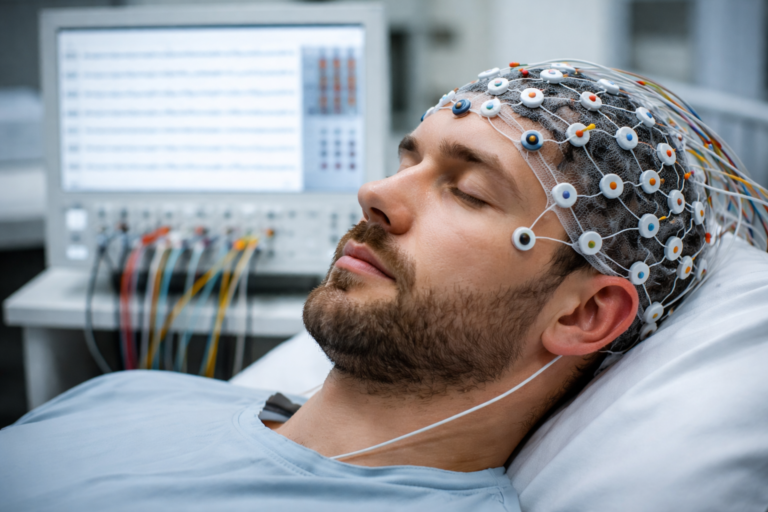
An Electroencephalogram, commonly known as EEG, is a safe and non-invasive test that records the electrical activity of the brain. For patients experiencing seizures, unexplained episodes of unconsciousness, memory disturbances, or persistent headaches, an EEG plays a crucial role in identifying abnormal brain wave patterns. Under the expert guidance of Dr. Sudheer Pachipala, EEG testing is performed with precision and interpreted carefully to provide accurate insights into neurological health. This test is widely used in modern neurology to diagnose and monitor conditions such as epilepsy, sleep disorders, encephalopathy, and certain brain infections. Because the brain communicates through electrical signals, even subtle abnormalities can be detected through this advanced diagnostic tool.
An EEG does not diagnose a “disease” by itself; rather, it helps identify the underlying neurological cause behind specific symptoms. Abnormal electrical activity may result from epilepsy, brain tumors, head injuries, stroke, infections like meningitis or encephalitis, metabolic imbalances, or degenerative brain disorders. In some cases, sleep disorders or unexplained behavioral changes may also warrant an EEG evaluation. By understanding the root cause of irregular brain activity, a neurologist can design a more targeted and effective treatment plan.
Patients who are advised to undergo an EEG often present with symptoms such as recurrent seizures, fainting spells, confusion, unexplained staring episodes, sudden behavioral changes, sleep disturbances, or memory lapses. Children with developmental delays or unusual movements may also require EEG testing. Sometimes, persistent headaches or episodes of loss of awareness raise suspicion of underlying electrical disturbances in the brain. Identifying these symptoms early allows timely intervention and better long-term outcomes.
The diagnostic process for an EEG is simple and painless. Small electrodes are placed on the scalp to record brain wave activity. The test usually lasts between 20 to 60 minutes, though longer recordings or sleep EEGs may be recommended in certain cases. Patients are generally asked to relax, breathe deeply, or respond to light stimulation during the procedure, as these activities can reveal abnormal patterns. The recorded signals are then carefully analyzed to detect irregular rhythms, spikes, or wave abnormalities that may indicate epilepsy or other neurological conditions. Accurate interpretation by an experienced neurologist is essential to ensure reliable results.
Treatment options depend entirely on the findings of the EEG and the underlying diagnosis. If epilepsy is confirmed, anti-epileptic medications are prescribed to control seizures. In cases where abnormal brain activity is due to infection, inflammation, or metabolic imbalance, treatment focuses on correcting the specific cause. Some patients may require lifestyle modifications, sleep regulation, or stress management strategies to reduce triggering factors. In rare situations, further investigations such as MRI brain scans or prolonged video EEG monitoring may be advised for comprehensive evaluation.
After diagnosis and initiation of treatment, regular follow-up is important to monitor progress. Patients may need repeat EEG studies to assess how well medications are controlling abnormal brain activity. Adhering to prescribed medication schedules, maintaining proper sleep, and avoiding known seizure triggers significantly improve treatment success. Family education and awareness also play a vital role, especially for individuals diagnosed with epilepsy.
EEG is considered a very safe procedure with minimal risk. There are no electrical shocks delivered to the brain during the test; it only records natural brain activity. In rare cases, patients with epilepsy may experience a seizure during the procedure, especially if flashing lights or hyperventilation are used as part of the test. However, the test is conducted under medical supervision, and appropriate precautions are always in place to manage such situations promptly.
It is important to consult a neurologist if you experience recurrent seizures, unexplained blackouts, sudden memory loss, persistent confusion, abnormal movements, or severe unexplained headaches. Early evaluation can prevent complications and allow timely management of potentially serious neurological conditions. Seeking expert care ensures accurate diagnosis, effective treatment, and long-term brain health.
For comprehensive neurological assessment and advanced EEG testing, consulting an experienced neurologist ensures clarity, safety, and personalized care tailored to each patient’s needs.
Chat With Me