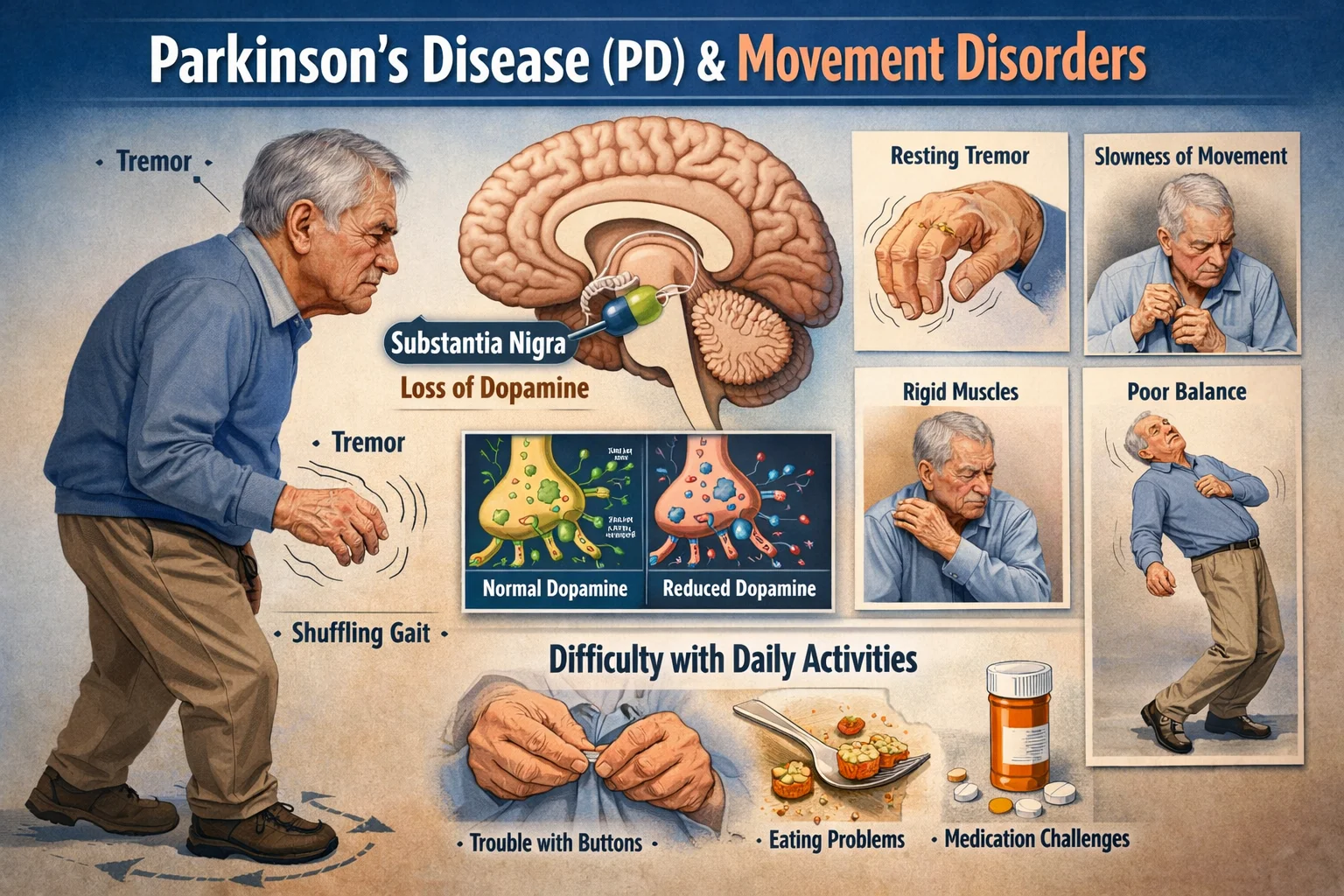
Parkinson’s disease is characterized by a gradual loss of dopamine, a chemical messenger that plays a vital role in controlling movement. As dopamine levels decline, patients begin to experience difficulty with voluntary movements. The condition not only affects motor function but may also influence mood, sleep, cognition, and autonomic functions.
While Parkinson’s disease is not currently curable, medical advancements allow for effective symptom management. Early and consistent neurological care can significantly slow functional decline and improve day-to-day performance.
The exact cause of Parkinson’s disease remains unclear. It is believed to result from a combination of genetic and environmental factors. Certain genetic mutations may increase susceptibility, while exposure to environmental toxins may contribute in some individuals.
Age is the strongest risk factor. Other potential contributing factors include family history, oxidative stress, and abnormal protein accumulation in brain cells. Ongoing research continues to explore the underlying mechanisms responsible for nerve cell degeneration.
The classic motor symptoms of Parkinson’s disease include tremors, muscle stiffness (rigidity), slowed movement (bradykinesia), and impaired balance or posture. Tremors often begin in one hand and may gradually spread. Patients may notice reduced facial expression, softer speech, smaller handwriting, or difficulty initiating movement.
Non-motor symptoms are also common and may include sleep disturbances, constipation, depression, anxiety, fatigue, and mild cognitive changes. These symptoms can sometimes appear before noticeable movement problems. The severity and progression of symptoms vary among individuals.
Diagnosis is primarily clinical and based on a detailed medical history and neurological examination. Dr. Sudheer Pachipala evaluates motor symptoms, reflexes, coordination, and overall neurological function. There is no single definitive test for Parkinson’s disease, but imaging studies such as MRI may be used to rule out other neurological conditions.
Early and accurate diagnosis is essential for initiating appropriate therapy and monitoring progression over time. Regular follow-up appointments help track symptom changes and treatment effectiveness.
Treatment for Parkinson’s disease focuses on restoring or mimicking dopamine function in the brain. Medications that increase dopamine levels or stimulate dopamine receptors are commonly prescribed to improve movement and reduce stiffness and tremors. Treatment plans are carefully adjusted based on symptom severity and individual response.
In addition to medication, physiotherapy plays a critical role in maintaining mobility, flexibility, and balance. Speech therapy may help address voice and swallowing difficulties. Occupational therapy assists patients in adapting daily activities for safety and independence. In selected cases, advanced therapies such as deep brain stimulation may be considered.
A multidisciplinary approach ensures comprehensive symptom control and improved quality of life.
Long-term management of Parkinson’s disease requires regular neurological follow-up. Medication dosages may need adjustments as the disease progresses. Maintaining an active lifestyle, engaging in regular exercise, and following a balanced diet contribute significantly to better outcomes.
Emotional well-being is equally important. Counseling, support groups, and family education help patients cope with physical and psychological challenges. Structured care and proactive management improve long-term stability.
As Parkinson’s disease progresses, complications such as falls, swallowing difficulties, speech impairment, and mobility limitations may occur. Advanced stages may lead to cognitive decline or dementia in some individuals. Medication-related side effects may also develop over time, requiring careful monitoring.
Early intervention, consistent follow-up, and personalized treatment significantly reduce complications and improve overall prognosis.
Medical consultation is recommended if there are persistent tremors, stiffness, slowed movements, balance problems, or unexplained changes in coordination. Early evaluation allows for timely diagnosis and initiation of therapy, which can substantially improve long-term outcomes.
Parkinson’s disease requires expert neurological care and continuous monitoring. With comprehensive neurological care and individualized treatment planning, most individuals with epilepsy can achieve effective seizure management and lead healthy, productive lives. Similarly, patients with Parkinson’s disease benefit greatly from early diagnosis, structured therapy, and consistent follow-up, enabling them to maintain mobility, independence, and the best possible quality of life.
Chat With Me