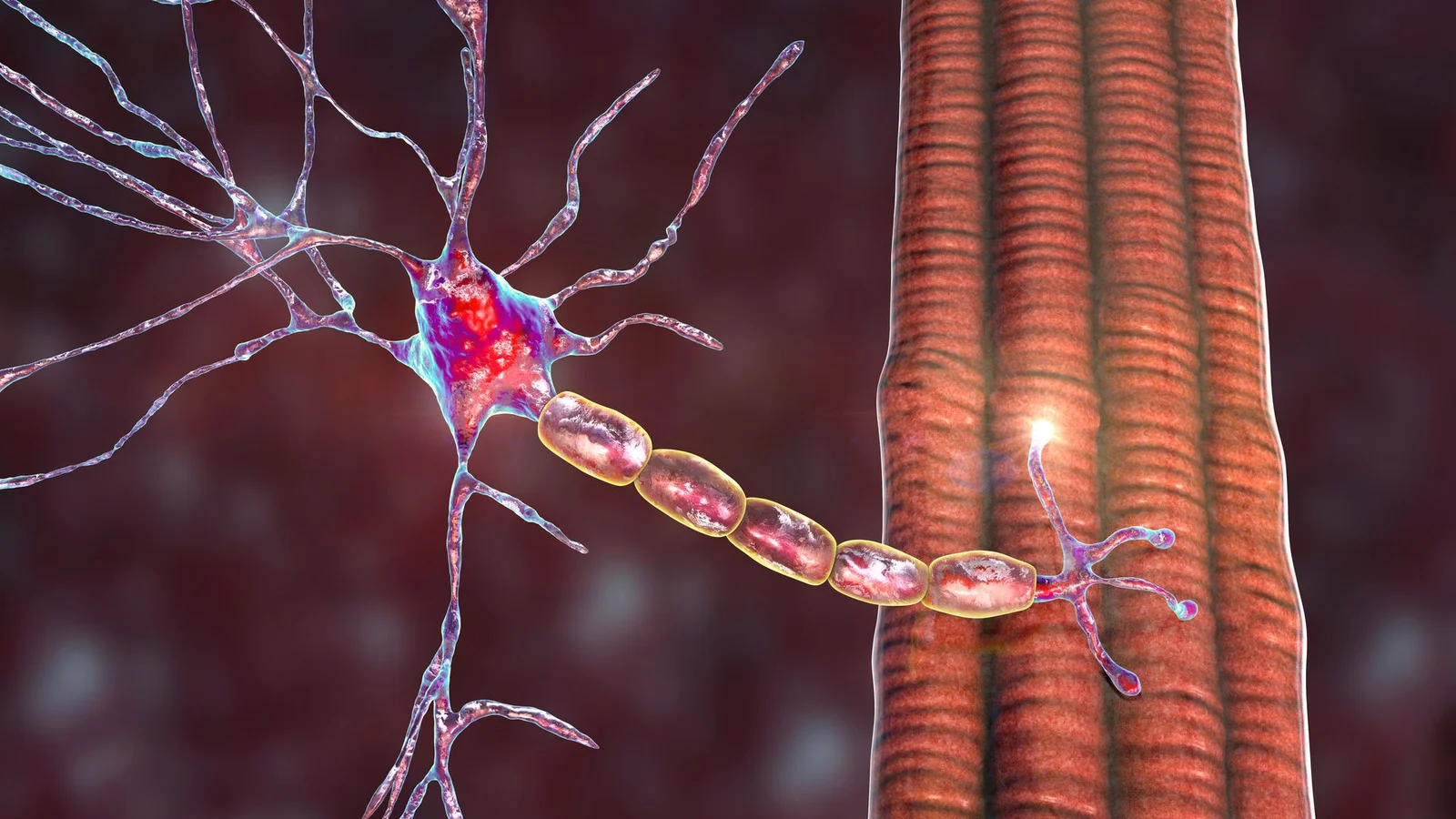
Myasthenia Gravis primarily affects voluntary muscles, especially those controlling eye movements, facial expressions, chewing, swallowing, and limb movements. The hallmark feature is muscle weakness that worsens with activity and improves with rest. In many cases, symptoms initially involve the eye muscles, leading to drooping eyelids or double vision.
The condition may remain limited to certain muscle groups or progress to involve other areas, including respiratory muscles in severe cases. Early neurological evaluation is crucial to prevent complications and improve long-term outcomes.
Myasthenia Gravis is caused by an abnormal immune response in which antibodies target acetylcholine receptors or related proteins at the neuromuscular junction. This immune-mediated attack blocks or destroys receptor function, reducing the efficiency of muscle contraction.
In some patients, abnormalities of the thymus gland, such as thymic enlargement or thymoma, are associated with the disease. Genetic predisposition and other autoimmune conditions may increase the risk. Identifying underlying factors helps guide treatment decisions.
The most common early symptoms include drooping of one or both eyelids and double vision. As the condition progresses, patients may experience difficulty chewing, swallowing, speaking clearly, or smiling. Limb weakness may cause difficulty climbing stairs, lifting objects, or holding the head upright.
Symptoms often fluctuate throughout the day and may worsen with physical exertion, stress, infections, or lack of sleep. In severe cases, respiratory muscle weakness may lead to a medical emergency known as myasthenic crisis, requiring immediate medical attention.
Diagnosis begins with a detailed medical history and neurological examination. Dr. Sudheer Pachipala evaluates patterns of muscle weakness and fatigability. Blood tests are performed to detect specific antibodies associated with Myasthenia Gravis.
Electrophysiological studies, such as repetitive nerve stimulation or single-fiber electromyography (EMG), help confirm impaired neuromuscular transmission. Imaging studies of the chest may be recommended to assess the thymus gland. Early and accurate diagnosis allows timely initiation of treatment and prevention of complications.
Treatment focuses on improving muscle strength and suppressing the abnormal immune response. Medications that enhance communication between nerves and muscles are often prescribed to relieve symptoms. Immunosuppressive therapies may be used to reduce antibody production and control disease activity.
In certain cases, surgical removal of the thymus gland may be recommended. During acute exacerbations, treatments such as intravenous immunoglobulin (IVIG) or plasma exchange may be required. A tailored treatment approach ensures effective symptom control and long-term stability.
Regular follow-up is essential to monitor treatment response and adjust medications as needed. Patients are advised to balance activity with adequate rest and avoid known triggers such as infections or excessive fatigue. Maintaining overall health, proper nutrition, and stress management contribute to better outcomes.
Education about early warning signs of worsening weakness enables timely intervention. Family support and structured care planning improve safety and quality of life.
If not properly managed, Myasthenia Gravis can lead to severe muscle weakness affecting breathing and swallowing. Myasthenic crisis is a serious complication that requires emergency medical care. Long-term immunosuppressive therapy may also carry potential side effects that require careful monitoring.
Early intervention and consistent medical supervision significantly reduce complications and enhance long-term prognosis.
Medical consultation is recommended if there is persistent drooping of eyelids, double vision, unexplained muscle weakness, difficulty speaking, or trouble swallowing. Immediate medical attention is necessary if breathing becomes difficult or swallowing is severely impaired.
Myasthenia Gravis requires expert neurological care and long-term management. With comprehensive neurological care and individualized treatment planning, most individuals with epilepsy can achieve effective seizure management and lead healthy, productive lives. Similarly, patients with Myasthenia Gravis benefit greatly from early diagnosis, targeted therapy, and continuous follow-up, enabling them to achieve effective symptom control and maintain an active, fulfilling life.
Chat With Me